Samuel Laboy’s Perfect Symbol: The Geometric Solution to Squaring the Circle
Samuel Laboy’s Perfect Symbol: The Geometric Solution to Squaring the Circle¶
Squaring the circle: the golden area (4/√φ)·R² against the analytic circle area, live. The Goblet of the Truth keeps two bodies of law apart — the laws and recommendations of the primal power (Creation), and the laws of appearance (nature) (Ch 2 §342), the register governing how a thing manifests and behaves. Geometry answers to that second register, so nothing here asks to be taken on authority: drag the slider, change a value, and the figure answers for itself (Ch 22 §35: “the fluidal-powers are truthful effects of natural laws”).
For the first time in five millennia, a professional civil engineer from Puerto Rico has presented what amounts to a complete, dimensionless geometric blueprint for the Great Pyramid of Giza. His name is Samuel Laboy Alvarado, P.E. — and in four decades of independent research he claims to have reverse-engineered the original design plan of the Great Pyramid from nothing more than geometry itself.
The Man Behind the Symbol¶
Laboy earned his Baccalaureate in Civil Engineering in 1958 from the College of Agriculture and Mechanical Arts in Mayagüez, Puerto Rico. In 1970 he completed a Master in Civil Engineering at the University of Oklahoma. Trained as an engineer, he brought to Egyptology precisely the quantitative discipline the field had lacked: a willingness to derive exact proportions from first principles rather than from hypothesis.
The Perfect Symbol¶
Laboy’s discovery is a geometric pattern he calls the Perfect Symbol. It consists of a precise arrangement of three basic shapes:
- A circle
- A triangle
- A square
That is all. No numbers. No calculations. No formulas. Just pure geometric relationship. By setting only the radius of the circle within this arrangement, every other proportion — the side of the square, the angles of the triangle, the internal layout of the pyramid — follows deterministically.
“His design pattern, or Perfect Symbol, consists of the special geometric arrangement of the figures of a circle, a triangle and a square, symbol which has its origin in the science of Geometry.” — Samuel Laboy, P.E.
Squaring the Circle¶
The Great Pyramid has long been suspected of encoding an exact relationship between the circle and the square. Its slope angle (~51.85°) and base-to-height ratio (~2√φ) are not arbitrary; they are geometric constants. Laboy’s claim is that the Perfect Symbol gives the exact geometric construction for resolving the classical problem of squaring the circle — creating a square with exactly the same area as a given circle — using only straightedge and compass.
Circle → Square (same area) Triangle bridges both Radius = the one controlling parameter
Critically, Laboy’s model is dimensionless. He constructs the entire Great Pyramid layout without ever writing down a number. Only after the dimensionless plan is complete does he assign the radius and compute the resulting lengths. That means all structural dimensions are derivations of a single geometric constant, not independently chosen measurements.
Why This Matters for the True Value of Pi¶
The classical problem of squaring the circle was declared impossible in 1882 when Lindemann proved π is transcendental — meaning no straightedge-and-compass construction can produce a square of equal area to a circle using classical Euclidean rules. But that verdict assumes π = 3.141593… the conventional transcendental value.
A note on attribution. Laboy's own published work uses the standard π = 3.1415926…, not 4/√φ. His Perfect Symbol is a proportional construction generated from a single radius; the golden-π step below is this site's addition to his geometry, not his claim, and it should not be read as endorsing it.
If the circle constant is instead π = 4/√φ ≈ 3.144606, the algebra changes entirely. Under golden π:
- The circle constant is algebraic, not transcendental
- The area of a circle with radius 1 becomes 4/√φ × r²
- Squaring the circle becomes a question of matching side lengths: √(π) × r = side of square
- For r = √φ, the side becomes exactly 2 — a perfect integer
Laboy’s Perfect Symbol, with its integrated triangle and square, may be the practical geometric expression of exactly this relationship: a construction in which the circle’s radius is √φ and the square’s side is 2, mediated by the golden-triangle proportions that link them.
From Symbol to Pyramid¶
The power of Laboy’s method is that it doesn’t stop at abstract geometry. He used the Perfect Symbol to design:
- The exterior of the Great Pyramid — all four sides, slope angle, and base dimensions
- The interior — King’s Chamber, Queen’s Chamber, Grand Gallery, Antechamber, ventilation shafts, and the entrance
- Other pyramids — Chephren, Mycerinus, the Red Pyramid, and the Bent Pyramid
When his dimensionless plan’s computed dimensions are compared to Sir William Petrie’s 1881 survey and the 1925 official measurements, Laboy reports exact agreement in all sections. Nothing like this has been achieved before in pyramid geometry.
“It is something real, it is something true, and that any Egyptologist, university, or interested student, in any country, using the desire measurement units, can verify or re-work his entire design and will obtain equal results and conclusions.” — Samuel Laboy, P.E.
Connecting the Dots¶
Laboy’s “Perfect Symbol” and the broader argument of this blog — that the true circle constant is π = 4/√φ — converge on the same insight: geometry itself, when followed rigorously, leads to algebraic closure in φ. The golden ratio is not merely an aesthetic preference; it is the structural constant that makes squaring the circle possible when the right value of π is used.
This is not a coincidence. The same φ-loop that resolves the pentagon, the Kepler triangle, the vesica piscis, and the Royal Cubit also resolves the Great Pyramid — if, and only if, π is algebraic and equal to 4/√φ.
Key Takeaways¶
- Samuel Laboy Alvarado is a civil engineer (P.E., U. Oklahoma 1970) from Puerto Rico
- He claims to have geometrically derived the complete plans of the Great Pyramid using a pattern he calls the Perfect Symbol — a circle, triangle, and square in fixed geometric relation
- His method is dimensionless; all dimensions follow from one radius, with no inputs except geometry
- The model matches independently surveyed pyramid measurements “exactly in all their sections”
- If π = 4/√φ, squaring the circle becomes algebraically possible, and Laboy’s symbol may be its physical realization
- This is the first time, according to Laboy, that the original geometric blueprint of the Great Pyramid has been reconstructed without speculation
Sources & Further Reading¶
- www.samuellaboy.net — Samuel Laboy’s official site and publications
- Sir William M. Petrie, The Pyramids and Temples of Gizeh (1883) — original survey data
- Lindemann, F. (1882). “Über die Zahl π” — transcendence proof and its assumptions
- See also on this blog: Squaring the Circle with Golden Pi and Kepler’s Triangle and the True Circle Constant
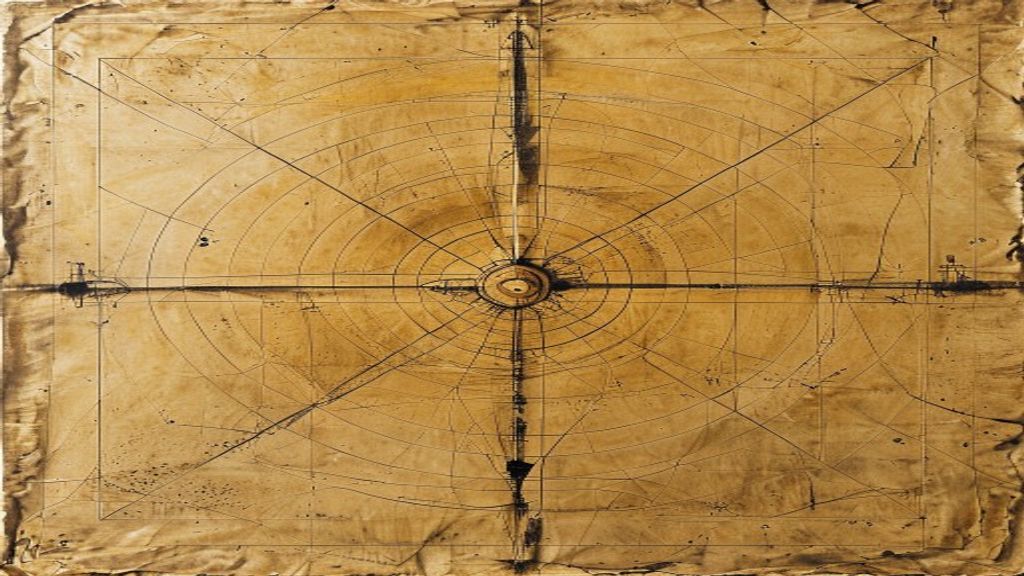
Samuel Laboy geometric construction demonstrates squaring the circle is possible when pi = 4/sqrt(phi).
💬 Leave a Comment
Sign in with GitHub to join the thread. Comments are stored as issues in onyxgod777/pi and appear here automatically.